Blog Summary
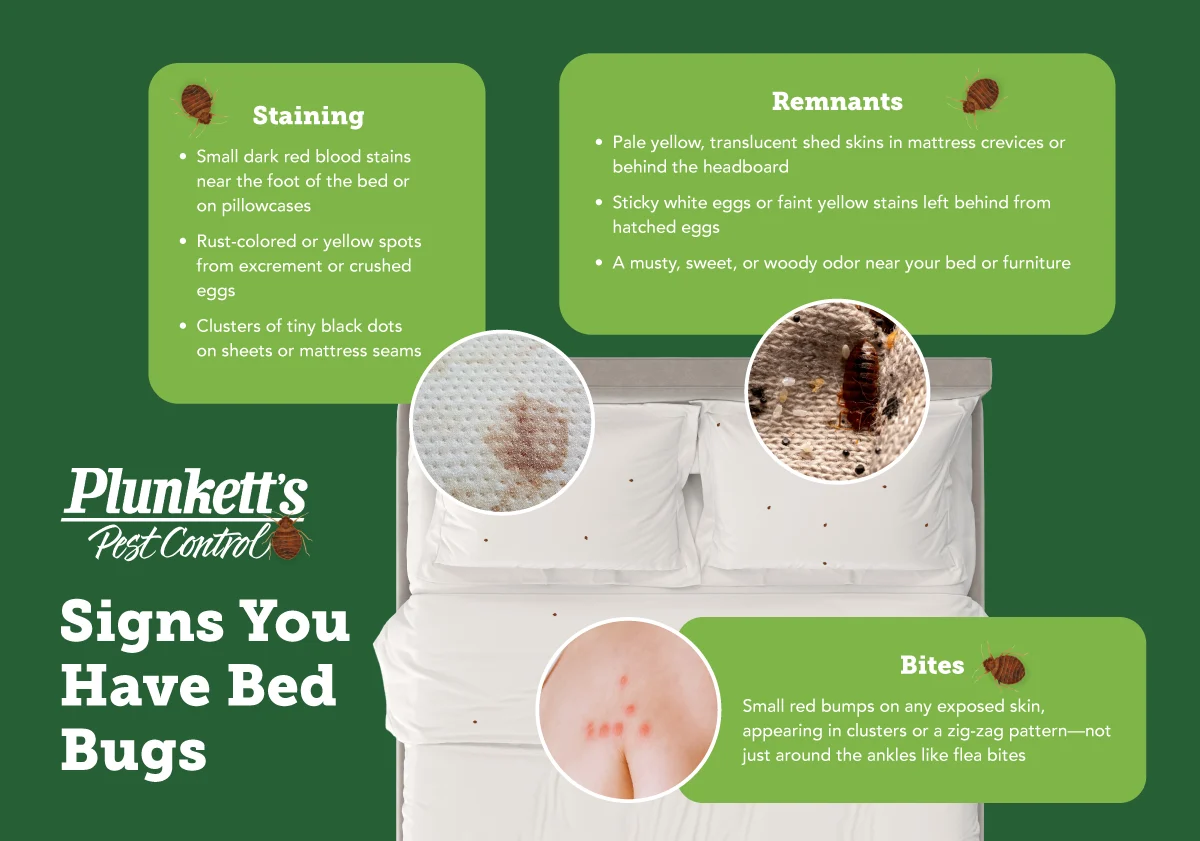
Bed bugs are tiny, elusive, and only come out at night — but they leave behind three telltale signs:
- Staining — Small blood spots, rust-colored excrement marks, or black spots on sheets and mattresses.
- Remnants — Shed pale-yellow skins, sticky eggs in hidden crevices, and a musty, coriander-like odor.
- Bites — Small, itchy red bumps on any exposed skin, often in a line or cluster.
Spotting one sign isn't proof, but multiple signs together mean it's time to call a pest control professional.
Bed bugs are notoriously difficult to detect and even harder to eliminate. About the size of an apple seed and active primarily at night, these pests can go unnoticed for weeks while the infestation grows. If you've been waking up with small, itchy bites or noticing unexplained stains on your mattress or bedding, bed bugs could be the culprit. The experts at Plunkett's have put together this guide to walk you through the most common signs of a bed bug infestation—including staining, physical remnants, and bite patterns—so you know exactly what to look for and when it's time to call in a professional.
What Do Bed Bugs Look Like?
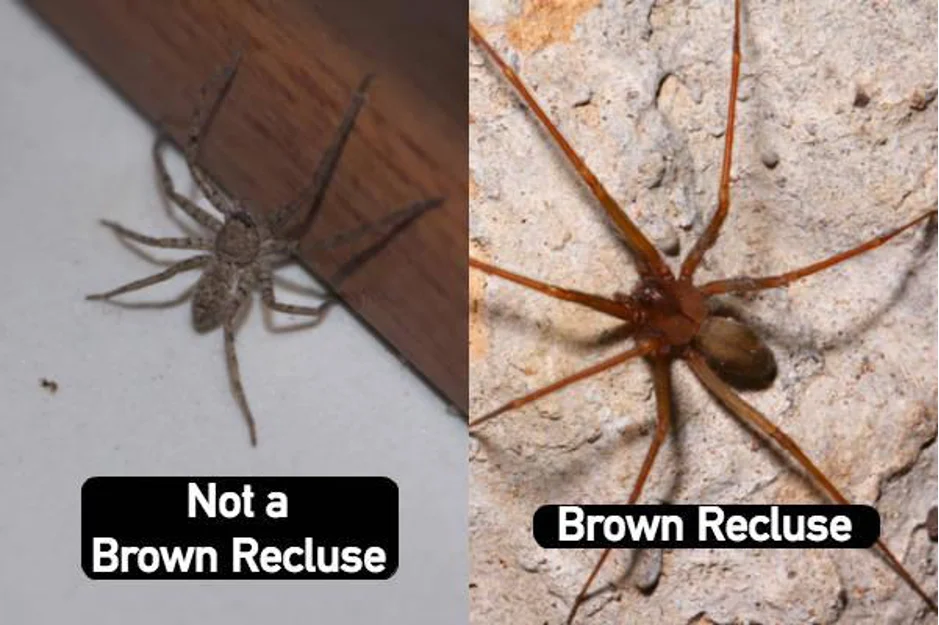
Bed bug bites can be mistaken for other insects like chiggers, mosquitoes, and fleas, so it’s important to know exactly what bed bugs look like so you can correctly identify your pest problem.
A major bed bug myth is that they’re impossible to spot with the naked eye. In reality, adult bed bugs are 4-5mm long (about the size and shape of an apple seed) and only the nymphs are difficult to see. Bed bugs are wingless with flat, brown bodies that become reddish in color after feeding.
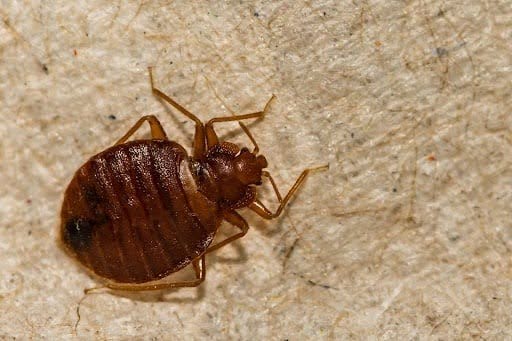
Close Up Image of Adult Bed Bug
Signs You Have Bed Bugs
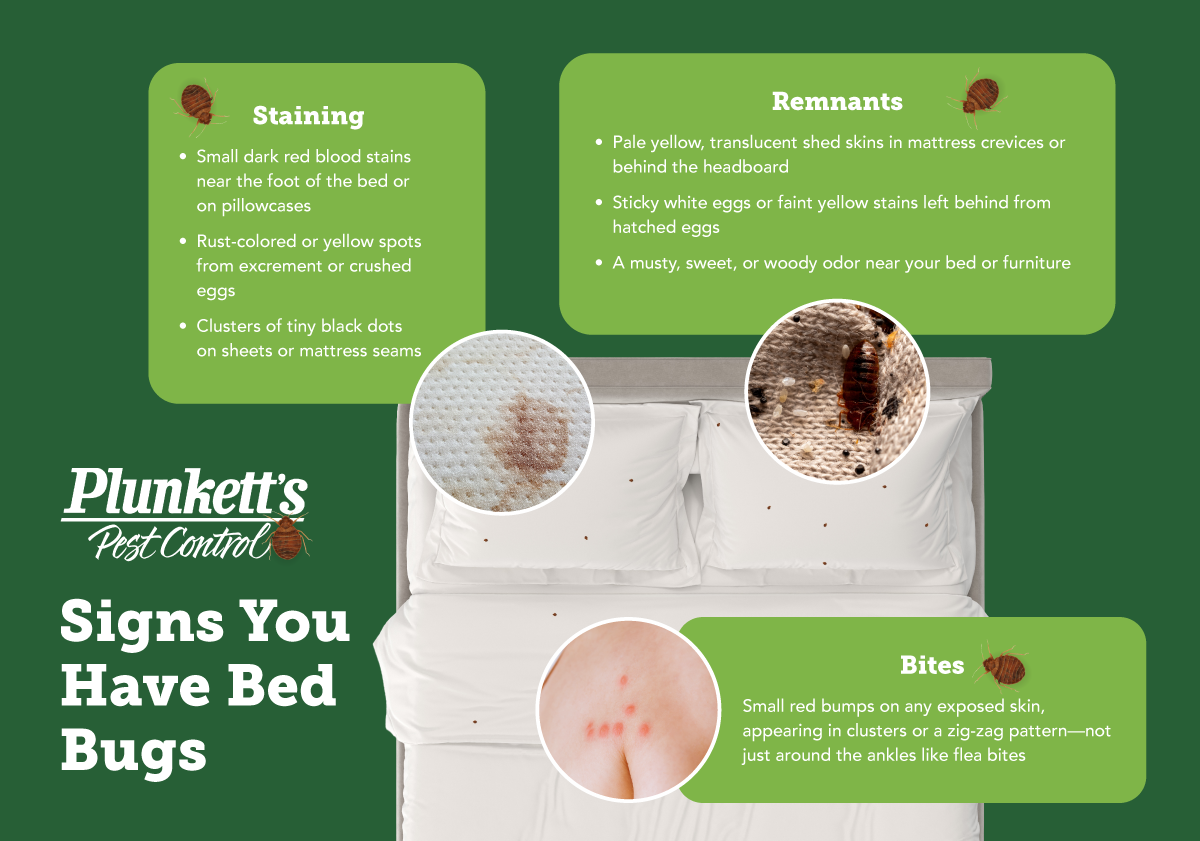
Bed Bug Staining
The first bed bug indicator is a variety of stains on your bedding, curtains, or other bedroom furniture. Stains on your bed are worth a closer look as they’re a common indicator of bed bugs.
There are three main types: blood stains, yellow stains or “rust” stains, and black spots. You may also want to read up on the best stain remover for bed bugs if you end up finding them.
1. Bed Bug Blood Stains
It’s important to note that finding blood stains on your bed sheets does not automatically mean you have bed bugs. Blood stains can happen for several reasons. You could have itched a scab while you were sleeping or reopened a cut while tossing and turning.
The blood stains you’re looking for are primarily small, dark red, and either roundish or smeared. Bed bug blood stains occur during feeding and are notably found near the foot of the bed or on your pillowcase. The space between your pillow and pillow case makes a perfect daytime hiding spot, so it’s possible to crush them when you lie down and cause a small red stain on your pillow as well.
2. Yellow Bed Bug Rust Stains
The second most common are yellow bed bug stains that appear rust-colored. The cause of these stains is bed bug excrement or crushed eggs. Excrement is a rusty red, brown, or black color, and it tends to bleed into bed sheets, almost like a felt-tip pen or marker would. Excrement stains are quite small and look dot-shaped or splotchy. Over time, these stains can diffuse to cover a larger area and fade to a lighter brown color.
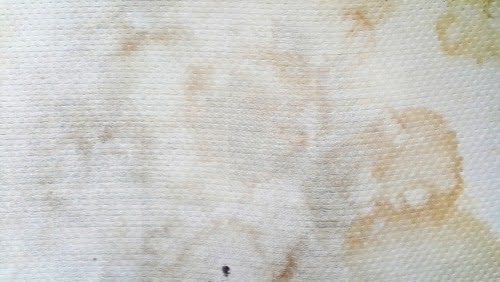
Image of Yellow Stains from Bed Bugs
3. Black Spots
These types of stains also come from blood or bed bug excrement but can appear darker if the blood or fecal matter is less fresh. Since bed bugs feed on blood, they often excrete this digested blood, and it can show up as a smattering of small dark spots on your sheets as time passes. If you see a cluster of small black spots on your bedding and know you don’t have a mold problem, bed bugs could be the culprit.
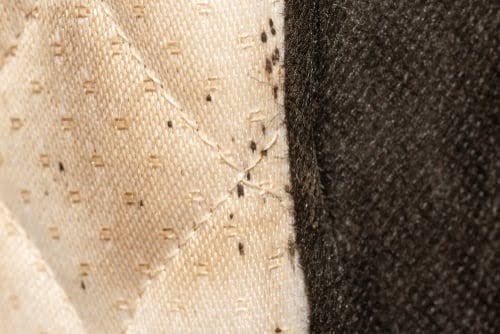
Image of Black Bed Bug Stains
Bed Bug Remnants
The second most common sign of bed bugs is remnants from the pest itself in the form of molted skin, eggs or a prominent musty odor.
1. Molted Skin
Believe it or not, bed bugs actually have to shed their skin five times before reaching full maturity. This means they’ll be leaving behind traces of exoskeleton from molting if they’re present in your residence. These skins are slightly smaller than the bug itself, translucent, pale yellow, and slightly crusty.
Bed bugs require a full blood meal before molting, but it takes bed bugs 24 hours to digest these meals and they need to remain stationary while they do so. Look for shed skin husks in places where bed bugs might hide, like under the bed or behind the headboard. Keep in mind that over time, these skins may break into small, dry flakes.
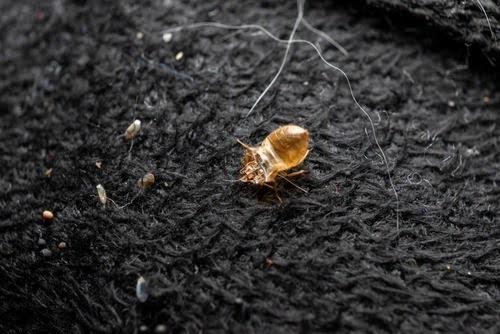
Photo of Shed Skin/Exoskeleton From a Bed Bug
2. Eggs
Bed bug eggs are quite sticky so the pest can lay them on nearly any surface, including walls or ceilings. They’re usually laid in pods or clusters in hidden locations, such as the lower sides of beds. Crushed or hatched eggs may leave behind faint, small yellow stains on fabric, as we mentioned before.
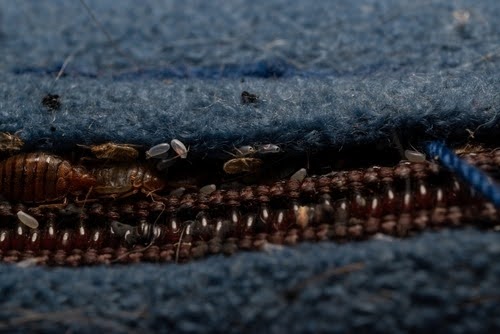
Close Up Image of Bed Bugs and Their Eggs
3. Musty Odor
Bed bugs smell when crushed or threatened by releasing an “alarm pheromone” from their scent glands.
What Do Bed Bugs Smell Like?
Bed bugs have a distinct odor. However, most people don’t notice it until the infestation has grown out of hand.
Bed bugs release pheromones as a way of communicating with one another. In small numbers, the scent is faint and easy to dismiss. But when a population has had time to establish itself, that odor becomes much harder to ignore. Most people describe it as musty and sweet—similar to overripe berries or, oddly enough, fresh cilantro. In more severe cases, the smell can take on a damp, locker-room quality that tends to linger in the areas where bed bugs hide, like mattress seams, headboards, and box springs.
It's worth noting that crushed bed bugs release a stronger, more pungent version of this scent. This is why squishing them isn’t the recommended approach.
Bed Bug Bites
The last key sign of a bed bug infestation is the presence of bites. Unfortunately, it’s easy to get bed bug bites confused with other common insect bites like fleas, chiggers, and mosquitoes. Here’s how to tell bed bug bites from other bites.
Bites from bed bugs can appear on any area of skin that is exposed when sleeping (unlike flea bites that will be concentrated around the ankles). They can appear as small red bumps ranging in features such as clear center, dark center, swollen exterior and zig-zag pattern.
It’s important to note that it’s impossible to identify bed bugs by their bites alone. Some people don’t react at all. That being said, it’s important to look for the other signs (staining and remnants) to accurately identify bed bugs.
In Need of Bed Bug Control?
If you’ve identified bed bugs in your home or have noticed any of the tell-tale signs we mentioned above, it’s time for bed bug pest control. While you can attempt to get rid of bed bugs on your own, it’s difficult as they breed so rapidly and the nymphs are so difficult to see.
Rest easy at night by calling Plunkett’s Pest Control. We can identify and rid your space of bed bugs efficiently and effectively. Schedule a service using the form below!